Gestalt & Enneagram Practitioner
MHFaider®
*
ICF Certified Coach
Business Psychologist
without losing themselves in it.
change
move through
I help leaders and organisations
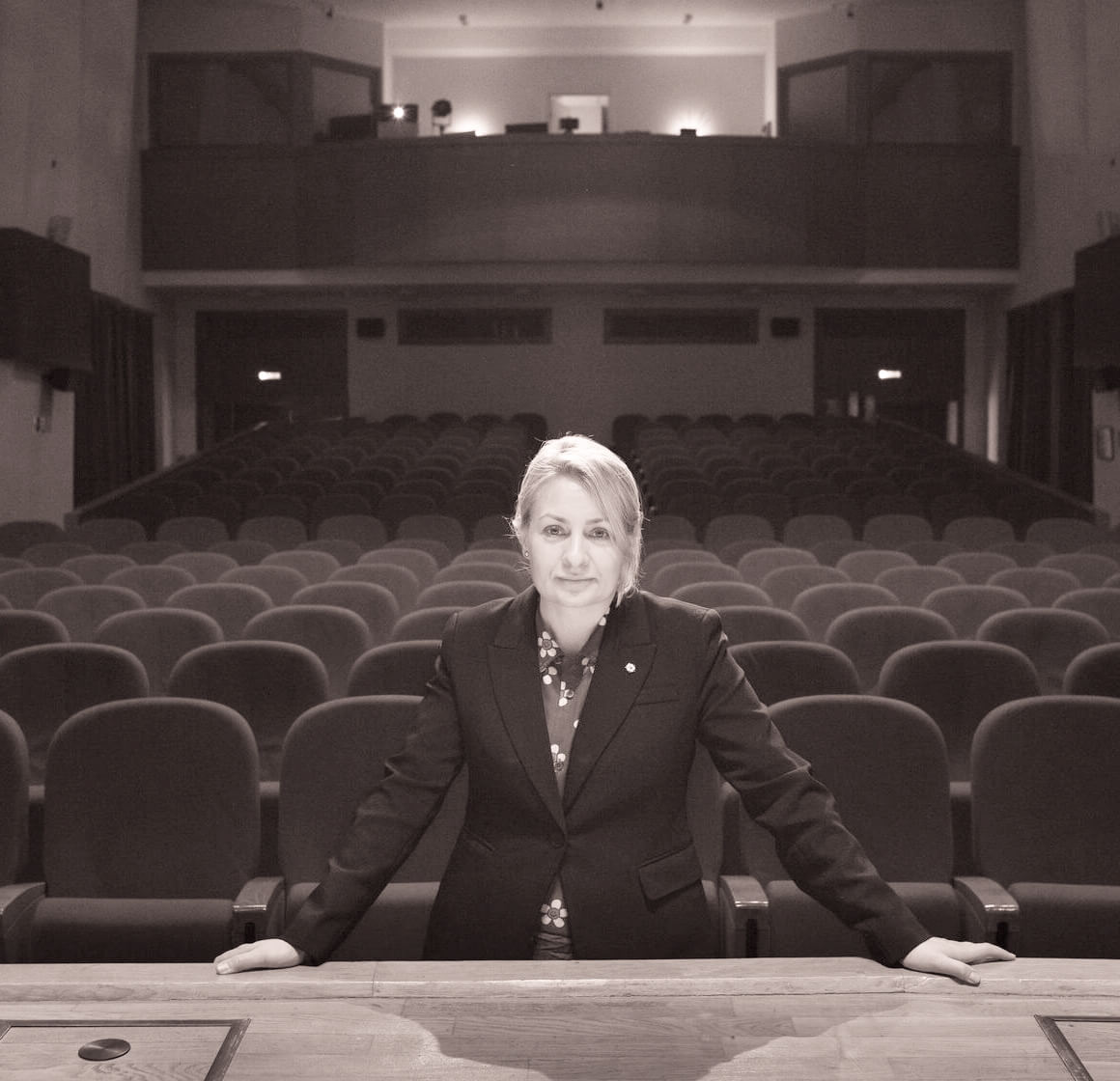
Hi. I’m Natasha Cooke.

About
Alongside running the studio, I taught leadership and communication at MGIMO University, working with students who were often stepping into their first real experience of organisational life — a useful reminder that most leadership struggles aren’t really about tactics, they’re about self-awareness under pressure.
I hold an MSc in Business Psychology from the Higher School of Economics, and I’m currently completing a second MSc in Business, Occupational and Work Psychology at the University of Hertfordshire, where my research looks at how line managers psychologically assimilate organisational change — particularly in the context of AI-driven transformation. I’ve been working with individual coaching and consulting clients since January 2022, and this academic work runs alongside that practice rather than instead of it — each one keeps the other honest.
I’m also an ICF-certified coach, a Gestalt and Enneagram practitioner, and a Mental Health First Aider®. Between the studio, the teaching, the coaching practice, and the research, the common thread has always been the same: helping people find their footing when something around them is genuinely shifting.
Away from work, I’m a mother of two wonderful boys growing up between two languages and two cultures — Russian and British — which has its own way of teaching you about identity and belonging. I spend as much time as I can walking in forests — it’s one of the few things that reliably resets me, that sense of being somewhere alive and unhurried. It’s probably no coincidence that I’m drawn to work about transitions: I’m in the middle of a significant one myself right now, rebuilding a life and a practice in a new country. I don’t think that makes me an expert on anyone else’s transition — but it does mean I’m not asking clients to do something I haven’t done, or am not doing, myself.
That experience shaped how I think about leadership more than any course could: I've hired, managed change, made decisions with incomplete information, and learned what actually helps people move through uncertainty, because I've had to do it myself.
I've spent the last 15 years building and running my own organisation — a children's theatre studio that grew from an idea into a functioning business with staff, seasons, budgets, and everything else that comes with keeping something alive for over a decade.
A bit more about
how I got here.
If you're drawn to deeper,
grounded in Gestalt awareness practice
more personal 1:1 work —
Method
Two lenses, one aim: helping you see clearly enough
to choose differently.
Together, these two approaches give me both a wide lens — the field, the system, the relationships — and a close one — the individual, their motivations, their blind spots.
Most consulting work needs both.
I draw on two frameworks that most business coaches don't typically use together —
Gestalt psychology and the Enneagram.
Neither is a trend I picked up recently; both come from years of formal training and, more importantly, years of watching them actually change
how people move through difficulty.
Consulting
I work with organisations navigating significant change — particularly AI-driven transformation — to close that gap. My approach is grounded in Gestalt field theory and current research into how people psychologically assimilate change: not simply comply with it, resist it, or perform adaptation to it, but genuinely take it in and move forward changed by it.
This typically looks like:
Most organisational change fails not because the strategy was wrong, but because the people responsible for delivering it — usually line managers — were never given the space or support to actually process what was being asked of them. They're expected to hold their teams together while their own footing shifts, often with no framework for what that requires.
It rarely plans
Change management usually plans the timeline.
for the people living through it.
I bring both academic grounding — my current MSc research is specifically on this — and 15 years of lived experience leading an organisation
so this isn't consulting from theory alone.
through its own changes,

Diagnosing an organisation's disclosure climate — how safe people actually feel raising concerns, confusion, or resistance during a change process — and what that's costing in engagement and delivery

Advisory work for leadership teams designing a change process, bringing a psychological lens to decisions usually made on operational grounds alone

Workshops and structured sessions that give managers a shared language and practical tools for change conversations, rather than one more slide deck to forget

Working directly with line managers to build the self-awareness and dialogic capacity they need to support their teams honestly, rather than just relaying decisions from above
Coaching
Coaching with me might help if you're:
As an ICF-certified coach, I hold the structure and accountability you'd expect from professional coaching. What I bring alongside that is a Gestalt-trained eye for what's happening beneath the surface — the hesitation behind a decision, the pattern that keeps repeating across different jobs or relationships — and 15 years of first-hand experience building and running an organisation of my own, so the conversation isn't purely theoretical.
Coaching works best when something genuine is shifting: a career change, a step up into leadership, a return to work after a break, a decision you can't quite make on your own. I work with individuals who want more than tactics — who want to understand their own patterns well enough to change how they respond, not just what they do.
For people navigating
not just a to-do list.
a real transition —
What this isn't: therapy, or a quick-fix productivity system. It's structured, honest, one-to-one work aimed
at durable change.
Stepping into a new leadership role and want to grow into it deliberately, not just survive it
Facing a career pivot and need clarity before you commit to a direction
Returning to work after time away and rebuilding your professional footing
Coming back after a break and finding that you’re not quite the person who left — sorting out what still fits and what needs to change
Caught in a pattern — overworking, over-deciding for others, avoiding conflict — that’s starting to cost you


Mental Health First Aid
In practice, this shows up as:
This isn't therapy, and it isn't diagnosis. What it does mean is that if you bring me into your organisation, whether for coaching, consulting, or advisory work, you're also getting someone who works within that framework as standard — who notices what other consultants might miss, and responds appropriately rather than working around it.
As a certified Mental Health First Aider® (MHFAider®, MHFA England), I bring a practical, trained-for skill set into every piece of coaching and consulting work I do: the ability to notice when someone may be struggling, to have a supportive, non-judgemental conversation about it, and to know when and how to signpost them towards appropriate professional support.
Psychological safety isn't a soft add-on to good leadership.
It's the foundation of it.
I'm also a member of the Association of Mental Health First Aiders.
Recognising signs that someone on a team may be struggling, and knowing how to raise it appropriately
Modelling and encouraging psychologically safe conversations as part of coaching and consulting engagements
Signposting individuals or organisations towards the right professional mental health support when it's needed
Bringing a mental-health-aware lens to organisational change work, where stress and overwhelm are often part of what's driving resistance


Education & Credentials
MSc Business Psychology, Higher School of Economics (HSE), Moscow
MSc Business, Occupational and Work Psychology, University of Hertfordshire (in progress)
ICF Certified Coach
Gestalt Practitioner (738 hours of training)
Enneagram Practitioner, ICTA
Mental Health First Aider® (MHFAider®), MHFA England
Member, Association of Mental Health First Aiders
Subscriber Member, British Psychological Society, Division of Occupational Psychology
LinkedIn:
cookenatasha
Email:
natashcooke@gmail.com
Or reach me directly:
Let's talk.
Whether you're exploring coaching for yourself or considering consulting support for your organisation, the first step is a conversation.